

Free Homework Help

Our education staff publish regular articles, tips and tutorials to help students with their homework
Chemistry Review: Solubility Rules 467 316 School Tutoring

Chemistry Review: Solubility Rules

There are set of rules that are a guide to determine if an inorganic compound is soluble in water. The rules are listed in order of importance and rule 1 will overwrite rule 5. Rule 1: All salts that include a group 1 element or ammonium are soluble. Rule 2: All nitrates and acetates are…

read more
Introduction to Conics: Ellipse 150 150 SchoolTutoring Academy

Introduction to Conics: Ellipse

Just like polynomials, there are different forms for the equation of the graph of ellipse. The general form, which was mentioned before is Ax2 + By2 + Cx + Dy + E = 0. The advantage of this for is that it is a general for all graphs in conics, while the disadvantage is that…

read more
Kinetic and Potential Energy 304 234 School Tutoring

Kinetic and Potential Energy

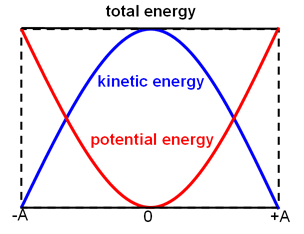
Kinetic and Potential Energy Energy can take on many forms, two of them being potential and kinetic. Energy is measured in joules (J) which is equivalent to Newton meters (N*m). Kinetic Energy Kinetic Energy is the amount of energy an object has due to its motion. This can be represented by the amount of energy…

read more
Periodic Trends: Atomic Size 823 367 School Tutoring

Periodic Trends: Atomic Size

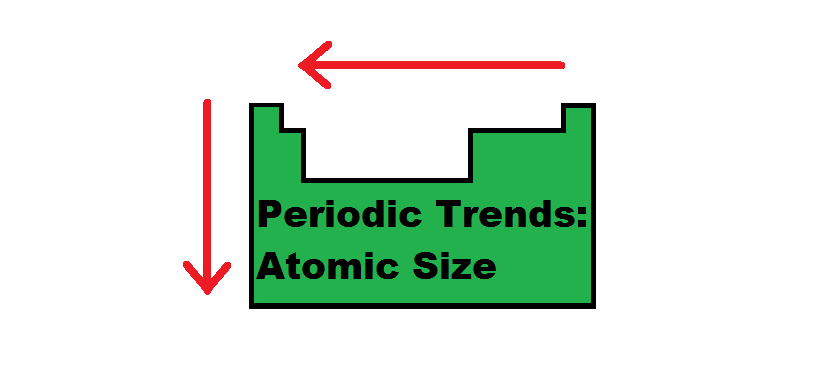
Specific patterns of certain elemental characteristics are present in the periodic table. The tendencies of these patterns increase or decrease as you move along the columns and rows of the table. These patterns are called periodic trends. One of them is atomic size. The atomic size, or atomic radius, is the distance between the nucleus…

read more
English Essay Help: Preventing Rambling 160 128 School Tutoring

English Essay Help: Preventing Rambling

One of the criteria that are judged during the SAT writing portion is the length of the essay. There are many people who took the test that find it hard to make it to the satisfactory length that markers are expecting. This is usually anywhere between 3-5 well-organized paragraphs. Most test-takers will then proceed and…

read more
Geometry: Distance From a Point to a Line 150 150 SchoolTutoring Academy

Geometry: Distance From a Point to a Line

Distance from a point to a line: We know that the perpendicular distance from origin to a straight line whose equation is a+by+c=0 is |c|/√(a2+b2). This formula works to find out the distance of a line from the origin whose coordinates are (0,0). Then how can we find the distance from a point different from…

read more
Equation of a Line – Normal Form 150 150 SchoolTutoring Academy

Equation of a Line – Normal Form

Normal: A normal to a line is a line segment drawn from a point perpendicular to the given line. Let p be the length of the normal drawn from the origin to a line, which subtends an angle ø with the positive direction of x-axis as follows. Then, we have Cos ø = p/m à…

read more
Cog Friday: Group Cognition 150 150 Suzanne

Cog Friday: Group Cognition

The human mind is a singular thing… until it enters a group. Group cognition is the study of how the mind processes information when people are in a group setting, and it has some interesting implications on thought processes. It happens all the time that people who are working together will come up with the…

read more
Monomials, Binomials and Polynomials 150 150 SchoolTutoring Academy

Monomials, Binomials and Polynomials

When dealing with differing kinds of Polynomials, there are several varieties. Today we will explore a few different variations, and break down the simple formula for naming them. A monomial is the product of non-negative powers of variables. A monomial has no variables in its denominator and will only have one term. For example: 13,…

read more
Introduction to Probability: Mutually Exclusive Events 200 166 School Tutoring

Introduction to Probability: Mutually Exclusive Events

Two events are mutually exclusive if they cannot occur simultaneously. Here are some examples of events which are mutually exclusive: Turning left and turning right are mutually exclusive because you cannot do both at the same time When you toss a coin, landing on heads or tails are mutually exclusive events When choosing a single…

read more